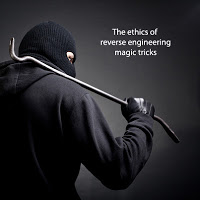
Edward writes: ‘What’s the difference between copying a magicians method and stealing magic tricks? I think I have a good idea how the magic trick ‘Inexplicable’ is done. Do I have to purchase it, or can I just make one, for my own use?‘
The difference between copying and stealing a magicians magic tricks.
If a magician develops an original magic trick, he or she may decide to sell their idea, and in most cases (unless expressly stated prior to purchase) this means that, if you purchase it, you have the creators permission to perform it and it is not considered stealing.
Even if you buy magic tricks, it could be argued that you are copying that magician by performing his or her idea. The fact that you have paid for the right to do so, however, means that in this instance, you are not stealing.
If a magic trick has been commercially released, you should always purchase a copy, rather than try to make your own. The inventor thought up the idea, put in the hard work and perfected the magic trick. Just the fact that you hadn’t’ thought of doing the trick until you saw the marketed product, should tell you that it’s not ‘your idea’ to steal.
But what about if you see a magic trick performed, but it is not available to buy?
You should attempt to contact the creator and ask for permission to perform their trick. You are still technically copying, but because you have gone to the trouble of getting permission, you are not stealing.
If you do not buy the magic trick, or directly get permission to perform someone else’s trick, then it would be stealing if you decide to copy the idea and perform it yourself. You will not find many who disagree with that statement.
Can you put a phone inside a bottle?
There is very little social pressure to play by the rules. Regular audiences don’t know if the magic tricks you perform are original, or if you are copying another magician.
The temptation to steal other magicians work is huge because the rewards are instant and there is very little or no consequence in doing so. In fact, as magicians we are often ENCOURAGED to copy the tricks of other magicians by our audiences. This is usually because they have seen a famous magician perform an amazing trick, and they want you to recreate it so that they can witness it live. Think about it – how many times have you been asked recently to put a phone into a bottle, put a card through a window or even levitate?!
Sometimes a spectator may talk to you about other magicians when you perform, and what tricks they have seen and how amazing it was:
“I was at my friend’s wedding, and the magician there turned all the cards into a solid block of glass! IN MY HAND!!”
It is this kind of outburst from spectators that can fuel the temptation to copy from other magicians because it creates the impression that a magic trick on its own can build you a great reputation. You begin to focus on what other magicians are performing, rather than considering how to work on the tricks you already have to ensure you can get a fantastic reaction from them.
Stealing magic tricks Is No Biggy.
Rightly or wrongly, there is a train of thought in magic that stealing is OK. Not because the magic community is full of people with low moral standards, but because it is difficult to see the consequences of stealing ideas or tricks from other magicians.
If you steal someone else’s idea and put it in your act, where is the harm? After all, the majority of magicians are only known to a small number of people. If you copy their material, who is going to know? The magician whose ideas you stole could easily live the rest of their life without ever knowing! Magic is also a lot smaller in scale than many other industries, so it could be (and has been) argued that the financial impact for a creator is insignificant if people copy their ideas.
Magicians stealing from magicians are not by any means a new phenomenon. There are a great many high-profile cases from years gone by you can read about in Jim Steinmeyer’s books ‘The Glorious Deception’, and ‘Hiding The Elephant’. Perhaps the most controversial was the theft of Robert Harbin’s ‘Zig-Zag’ Illusion by an American imitator. (You can find an excellent account of this story in a talk by Mike Caveney on the EMC 2010 DVD’s).
The wider impact of stealing magic tricks.
Every time a magician chooses to steal tricks from another performer, the impact is felt most within the magic community as a whole. Fear of being copied forces a lot of creators to publish their ideas too early in order to get credit (or some financial reward for their creativity) before someone else steals the idea. This can (and some might say- has) lead to under-developed or sub-standard magic tricks being released for sale.
It is also important to note that every time a magician opts to copy over creating something new or unique, there is one less original idea in magic that can inspire someone else in the future. Magic begins to suffer from a lack of depth, and magicians gravitate towards performing the same tricks as one-another instead of exploring something new.
A question of morals.
Ultimately, it is up to each of us to decide whether reverse engineering a magic trick is stealing, and whether or not this is a bad thing. There are no ‘magic police’ that are going to hunt down a magician for using someone’s idea. It all depends on our own moral view. We may wish to consider, however, what it is we actually gain from stealing an idea. It’s a method that is stolen. A series of moves in a particular sequence, or the design of a gimmick, or a principle. Nobody is stealing magic. It’s not possible to steal the great reaction we hope for, or the adoration of our spectators. Those things come from being a great performer- a quality nobody can take from somebody else.
Whether you feel copying another magician is good, bad or indifferent- It’s end result is pointless!
If you learn a magic trick from another magician, or even watch a performance and know the method already, seek out permission before you start performing the magic trick yourself. If it’s commercially released, purchase a copy. View it as a donation towards the creative process that lead you to discover the trick. Support the magic community, and inventors that take the time to develop magic tricks. We all benefit from their hard work.
What do you think? Share your thoughts in the comments section below:


